

The Deputy Minister for Tourism, Culture and Creative Arts, Yussif Issaka Jajah, has called on Ghanaians to embrace and promote their mother tongue as a pathway to cultural preservation, social cohesion and sustainable national development.
He made the call in a keynote address delivered on behalf of the Sector Minister, Abla Dzifa Gomashie at the 2026 celebration of International Mother Language Day held at the British Council in Accra.
Marking the 27th anniversary of the observance instituted by UNESCO in 1999, the Deputy Minister recounted the historical significance of the day, which honours students who lost their lives in 1952 while protesting language discrimination. He noted that the annual celebration promotes linguistic diversity, cultural heritage and multilingual education worldwide.
“Language is the riverbed on which culture flows,” he stated, stressing that indigenous languages are central to identity formation and the transmission of values across generations. He cautioned that neglecting mother tongues in education and daily life risks eroding Ghana’s cultural foundations and weakening national cohesion.
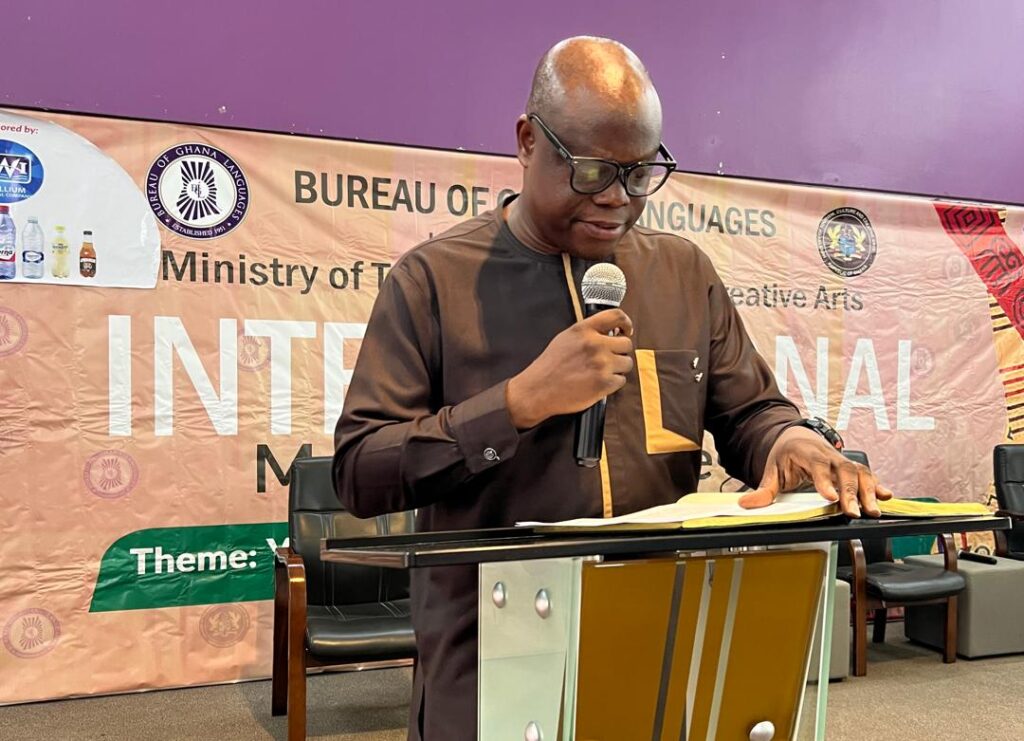
Drawing lessons from the economic transformation of the “Asian Tigers,” he observed that countries such as South Korea and Singapore achieved industrial growth while maintaining their local languages as primary mediums of instruction and governance. According to him, African countries can similarly pursue modernization without abandoning their linguistic heritage.
He further referenced global data indicating that nearly 3,000 languages risk extinction before the end of the century, underscoring the urgency of protecting indigenous languages. Hon. Jajah encouraged citizens to “Speak Ghana, Eat Ghana, Wear Ghana and Feel Ghana,” linking language promotion to broader national development goals.
In a welcome address, the Acting Executive Director of the Bureau of Ghana Languages, Ebenezer Ahiator, highlighted the Bureau’s longstanding role in championing the annual celebration despite limited resources. He noted that the 2026 theme, “Youth Voices on Multilingual Education,” underscores the critical role of young people in preserving linguistic diversity and advancing inclusive education.
Citing research, he explained that children who learn in familiar languages demonstrate stronger literacy outcomes and improved academic performance. He also called for renewed policy attention to Ghanaian language instruction in senior high schools, urging collaboration between education authorities to restore compulsory Ghanaian language studies at that level.
The event brought together Members of Parliament, representatives from UNESCO, traditional leaders, academics, education officials, and students.
The Deputy Minister was accompanied by the Director for Culture and Creative Arts, Mr. Divine Owusu-Ansah.
The celebration reaffirmed government’s commitment to safeguarding Ghana’s linguistic heritage and promoting multilingual education as a foundation for inclusive growth and national identity.