

“This is not just photography; it is love made visible.” The Minister for Tourism, Culture and Creative Arts, Abla Dzifa Gomashie, has officially opened two exhibitions under the theme “Preserving Ghana: The Living Archives of a Nation” at Ahenfie, Dikan Centre, highlighting the importance of preservation, archiving and creative documentation to Ghana’s national identity.
The Minister praised President John Dramani Mahama for recognising that culture goes beyond “drumming and dancing,” describing heritage and creativity as powerful drivers of national development. She paid tribute to the late Emmanuel Bobie, whose photographic work, Ghana: The Journey Within, captures the dignity, resilience and everyday lives of ordinary Ghanaians. “This is not just photography; it is love made visible,” she said.
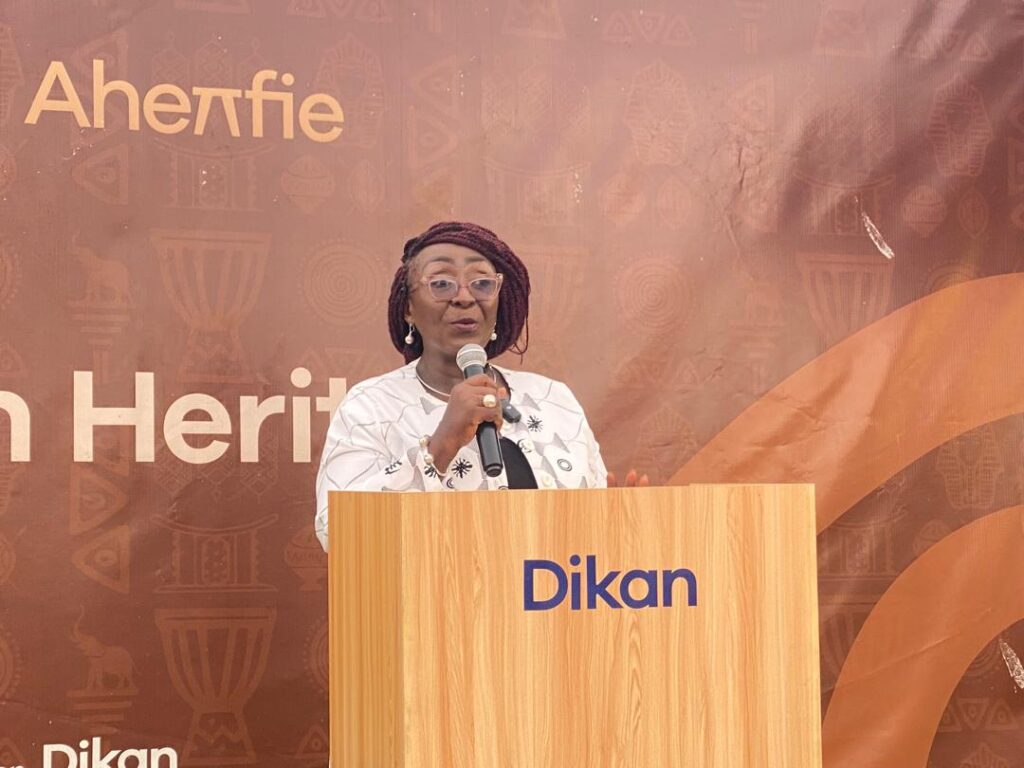
Gomashie commended Dikan for transforming archives into “living classrooms” through digitisation, research and public access, and described its partnership with the Ghana Armed Forces as a model of “living culture.” In her role as Acting Chair of the ECOWAS Committee on the Reparation of Stolen Artefacts, she stressed the need to reconnect Ghanaian youth with their heritage, noting that societies remain incomplete when their cultural assets are kept outside the continent.
Chairman of Dikan, Mr. Kofi Kwakwa, cautioned that societies that lose access to their memories risk losing their future, while Executive Director Mr. Paul Ninson outlined Dikan’s work through the AWO Institute, which has digitised millions of records, including Ghana Armed Forces archives and major collections on Ghanaian music history.
Captain Veronica Adzo Arhin, Acting Director-General of the Department of Public Relations of the Ghana Armed Forces, said the collaboration with Dikan has produced remarkable results in just over a year. She revealed that more than 70 million Armed Forces records have been processed, conserved and digitised, describing the achievement as historic and transformative.
According to her, preserving these archives strengthens transparency, deepens institutional history and enhances public understanding of the Armed Forces’ role in shaping Ghana’s destiny. She added that 25 Armed Forces personnel have been trained by Dikan and are now working alongside its professionals, building specialised capacity that could support other state institutions in future.
The event, which also featured contributions from Prof. John Collins, ended with a guided tour of the Dikan Centre’s exhibitions and archival facilities, marking a significant milestone in Ghana’s cultural preservation efforts.